
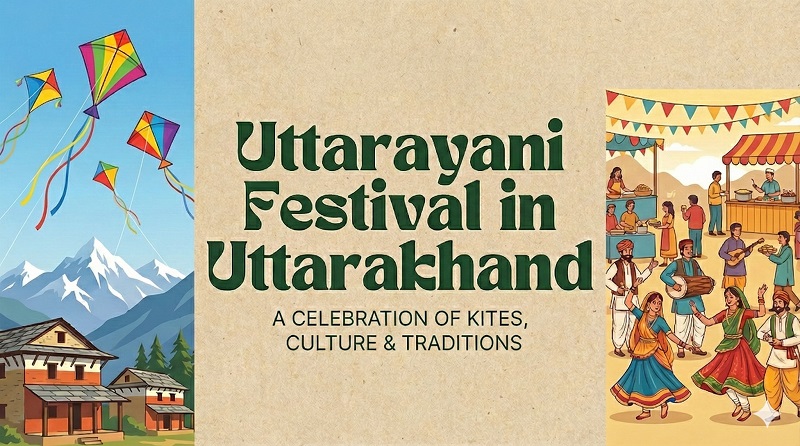
Uttarakhand is famous across the world as Devbhoomi, the Land of Gods. But Uttarakhand is equally a Land of Festivals. Celebrations continue throughout the year, beginning right at the start of January.
The first and most significant festival to mark the calendar is the Uttarayani Festival. While people across India celebrate this auspicious day as Makar Sankranti, in the valleys of the Himalayas, this occasion carries a unique identity.
It is not just about the change of season; it is the spark that brings the entire community together after the quiet, freezing winter. Whether you call it Uttarayani or the Festival of the Sun, for a Pahadi, this is the true beginning of the new year’s festivities.
What is the Uttarayani Festival?
The word Uttarayan, or Uttarayani, comes from two Sanskrit words Uttar (North) and Ayan (Movement). It marks the day when the sun enters the zodiac sign of Capricorn (Makar) and begins its journey toward the Northern Hemisphere.
In Uttarakhand, this is significant day. It is believed that the days become longer and warmer from this point on, marking the end of the shivering cold. Spiritually, it is considered the day of the Gods.
It is said that dying on this day leads to Moksha, a belief dating back to the Mahabharata when Bhishma Pitamah waited specifically for Uttarayan to leave his body.
While families celebrate inside their homes with sweet delicacies like Ghughuti, the real celebration happens outdoors on the riverbanks.
When the Uttarayani Festival is Celebrated (Date & Time)
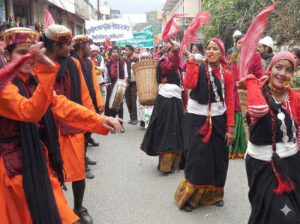
The festival follows the solar calendar, so unlike other Hindu festivals that change dates every year, this one is stable. It falls on January 14 every year, the day of Makar Sankranti. Occasionally, depending on astronomical calculations, it might shift to January 15.
For travelers planning to visit the famous Uttarayani Mela Bageshwar 2026, the main bathing ritual will happen on the morning of January 14. However, the fair itself is not a one-day event. It typically continues for a week, turning the quiet town into a bustling hub of commerce and culture.
The Famous Uttarayani Mela Bageshwar
While the festival is observed across the state, the heartbeat of the celebration is in Bageshwar. This is where the Uttarayani Mela Bageshwar takes place.
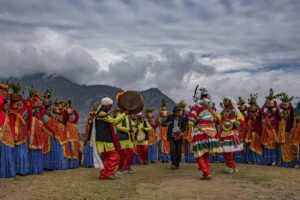
The location is special because Bageshwar is situated at the Sangam of two holy rivers, the Saryu and the Gomti. On the morning of the festival, devotees gather here for a holy dip, known as Makar Snan. The water is freezing, but the faith is stronger. Taking a dip here is considered as holy as bathing in the Ganges at Haridwar.
After the dip, the crowd moves toward the ancient Uttarayani temple or the Bagnath Temple. Dedicated to Lord Shiva, this ancient stone temple overlooks the confluence. The ringing of bells and the smell of incense create a spiritual aura that stays with you long after you leave.
The History of Uttarayani Mela (Coolie Begar)
Most religious fairs are just about prayer, but the Uttarayani fair holds a fiery page in India’s history books. This mela is a symbol of resistance and Kumaoni pride.
Back in 1921, during British rule, the locals were forced to work as coolies for British officials without pay. This oppressive system was called Coolie Begar. The locals were tired and angry. On January 14, 1921, during the Uttarayani Mela, a massive crowd gathered at the Saryu bagad.
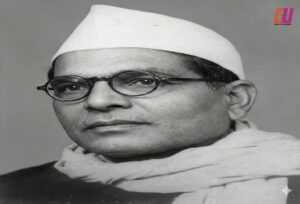
Led by the freedom fighter Badri Datt Pandey, thousands of villagers took a solemn oath by the holy Saryu water. They swore they would no longer serve as free coolies.
In a powerful act of defiance, they threw the official registers of the Coolie Begar system into the river. This peaceful but firm revolution ended the practice and earned Badri Datt Pandey the title of Kumaon Kesari.
So when a local walks through the Uttarayani Mela Uttarakhand, they are walking on ground that once shook the foundations of the British Empire.
What to Experience at the Uttarayani Fair?
For a tourist, the mela is a sensory delight. Historically, this fair was a major trade route. Traders from Tibet (Bhotiyas) would come down with their yaks to sell wool, salt, and borax, while locals sold grain and jaggery.
Even today, the commercial side of the Uttarayan Mela in Uttarakhand is vibrant. Here is what you should look out for:
- Traditional Woolens: You will find authentic Thulma (thick woolen blankets) and Chutka (rugs) made by local artisans. These are incredibly warm and durable.
- Copper and Bamboo: The fair is famous for intricate copper utensils and Ringal (bamboo) baskets that are hard to find in cities.
- Cultural Performances: The evenings are reserved for the famous Chholiya dance. Dancers dressed in warrior attire with swords and shields perform to the beat of traditional drums. You will also hear Jhora and Chanchri folk songs that tell stories of the mountains.
- Local Food: Do not miss the fresh citrus fruits like Galgal and ready-to-eat sweets that are sold in heaps at the fairgrounds.
Conclusion
The Uttarayani festival is a perfect blend of everything that makes Uttarakhand special. It has the spiritual peace of the Saryu river, the brave history of the 1921 revolution, and the colorful chaos of a village fair.
Whether you are a devotee coming for the holy dip, a history buff interested in the Coolie Begar movement, or a traveler wanting to buy a warm Thulma, this festival welcomes everyone. It is a reminder that even in the coldest month of the year, the spirit of the hills remains warm and welcoming.