
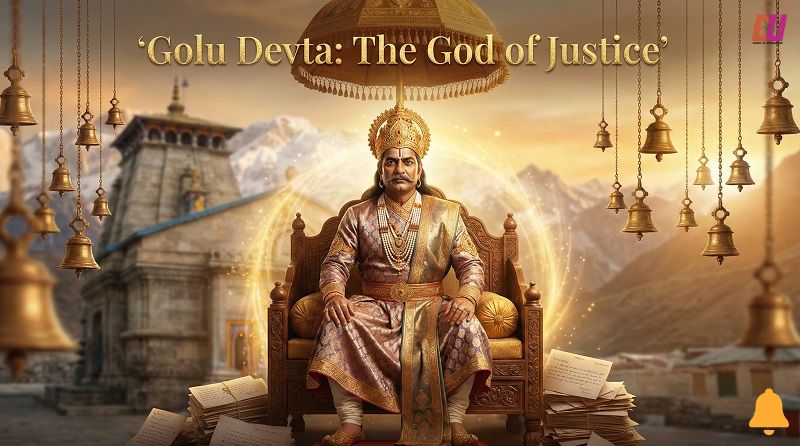
You will find Golu Devta at the heart of Kumaon’s faith, a folk deity invoked for swift, impartial justice and personal vows. If you seek how justice, ritual, and local history fuse in Uttarakhand, Golu Devta answers that need, devotees appeal to him for judgments, favors, and speedy redress through offerings, bells, and written petitions.
Walk through his origins as an incarnation linked to Shiva, the temples where thousands leave bells and wish-letters, and the rituals that keep his authority alive across villages and towns.
The sections ahead will trace Golu’s historical roots, key shrines like Chitai, ritual practices and festivals, and the role he still plays in contemporary Kumaoni life.
The Divine Identity of Golu Devta
Golu Devta appears as both a historical king and a divine guardian whose role combines warrior, judge, and protector. You will see how his origin stories, iconography, and local justice practices define him as a unique folk deity of Kumaon.
Origin of Golju Devta
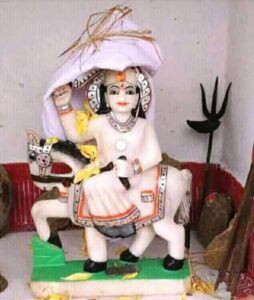
Local tradition traces Golu Devta to a royal figure often named Jhalkari or a Katyuri era prince, who lived in the hill principalities of Kumaon. Some Uttarakhandi say he was a just king whose spirit was deified after a violent death, others describe his incarnation as an aspect of Gaur Bhairav, linking him to Shiva.
Oral histories emphasize his earthly rule, his refusal to tolerate corruption, and miraculous interventions on behalf of devotees. Pilgrims at Chitai and other shrines recount petitions granted and disputes settled, which reinforced belief in his continued presence.
These layered narratives make Golu both a human exemplar and a supernatural arbitrator for local communities.
Attributes and Symbols
Golu Devta’s imagery blends royal and martial elements. You will commonly see him depicted on horseback, wearing a crown or turban, and holding a sword, symbols of rulership and the power to enforce order.
Devotees offer bells, tricolored threads, and votive metal plates, temples display thousands of brass bells and written petitions tied to trees or nailed near the sanctum. These physical tokens function as both devotional offerings and public records of requests for redress.
The constant presence of horse iconography, legal petitions, and the auditory shrine environment (bells ringing) signals his dual role as protector and active adjudicator.
Golu Devta as the God of Justice
Golu devta functions as a local tribunal figure, people bring unresolved disputes, oath-taking rituals, and written appeals to seek swift moral remedy. You will find formalized practices, such as swearing on his idol or posting written petitions that treat the deity as a binding arbiter.
Temple priests and village elders often mediate, but the community’s belief that Golju will punish falsehoods lends extra weight to settlements. Reports of dreams, sudden confessions, or misfortunes befalling wrongdoers sustain the perception that justice occurs beyond formal courts.
This practical justice role explains why his shrines, notably Chitai, attract both personal supplicants and those seeking social accountability.
Historical Significance in Kumaon
Golu Devta shaped local justice practices, village rituals, and political symbolism across Kumaon. His temples became centers for dispute redressal, votive offerings, and communal identity from valley settlements to hilltop hamlets.
Cultural Integration
- Kuladevata: You see Golu Devta woven into daily life across Kumaon through rituals, festivals, and household worship. Villagers treat him as an Ista or Kuladevata, meaning he functions as both personal protector and clan deity, so offerings like ghee, milk, halwa, and bells appear in homes and shrines alike.
- Jagar Ritual: In the mystical Jagar ceremonies of Uttarakhand, the spirit of Golu Devta is invoked into a medium (called a Dangariya). Through the medium, the deity speaks directly to the family, solving disputes and offering guidance.
Temples dedicated to Golju, especially Chitai near Almora, gather diverse social groups. Pilgrims attach brass and iron bells, and post written petitions seeking justice; these practices transform sacred space into a public forum where moral claims get visible recognition.
Folk songs, oral legends, and seasonal fairs preserve his stories. You encounter multiple names, Goljyu, Gwela, & Gaur Bhairav, reflecting syncretic links with Shaiva traditions and local animist customs. That blend keeps his cult relevant across caste and occupational lines.
Royal Connections and Patronage
You can trace Golu’s rise in part to patronage from Kumaon’s ruling families and local chiefs. Regional chiefs and former Kumaon kings endorsed specific shrines, granting land or ritual privileges that increased a shrine’s authority to adjudicate disputes.
The links to royalty also framed Golu as a symbol of legitimate rule. Rulers invoked him to validate judgments and public decisions, thereby reinforcing both village-level arbitration and centralized authority when needed.
Court records, local histories, and temple endowments show how patronage financed temple maintenance and festivals. Those resources attracted pilgrims and consolidated Golu’s role as an institutionalized source of justice rather than only a folk protector.
Major Temples and Sacred Sites
You will find Golu Devta worship concentrated at a few key shrines where devotees seek swift justice and offer bells, letters, and petitions. These sites combine historical associations with local ritual practices that shape how people interact with the deity.
Golu Devta Chitai Temple
Chitai Temple sits about 8 km from Almora and serves as the most famous focal point for Golu Devta devotion. You will notice thousands of brass and copper bells hung across the compound, each bell represents a vow, a fulfilled wish, or a plea for justice.
The main idol at Chitai is a metal figure of Golu Devta, often dressed in local ritual cloth and garlands. Devotees bring written petitions and tie them near the sanctum or place them in designated boxes, expecting prompt divine intervention. Practical details: the temple is open daily, draws large crowds during festivals, and is easy to reach from Almora by road.
Ghorakhal Temple
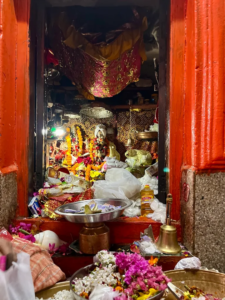
Golu Devta temple in Ghorakhal, near Bhowali and Nainital, hosts another important temple where you can see similar petition practices and bell offerings. The shrine at Ghorakhal is prominent for combining Golu Devta worship with local Brahminical rites, reflecting a blend of folk and classical Hindu customs.
Other Prominent Shrines
Other notable sites include Champawat and Chamarkhan (Tarikhet), each with distinct local histories linking Golu Devta to regional rulers or folk heroes. When you visit these shrines expect smaller crowds than Chitai, strong local involvement, and site-specific rituals such as animal or grain offerings in some places.
Rituals and Worship Practices
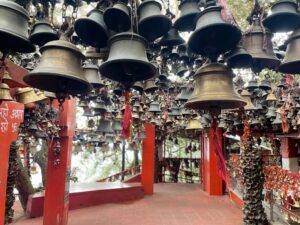
You will see petitions filed in writing, votive bells hung in gratitude, and specific offerings placed before the deity. Rituals mix public temple practices with personal vows and follow local customs unique to Kumaon.
Petitioning for Justice
You present written petitions called likhith in many shrines, especially at Chitai near Almora. Write your complaint or request on paper, sign it, and submit it at the temple office or tie it near the sanctum; priests and caretakers record and forward serious cases for local mediation.
Devotees often attach a small bell or cloth to mark a petition and to show they seek a verdict. You will frequently see groups pleading for land, family disputes, or help with bureaucracy. Many devotees return and hang a bell once the matter resolves, signaling the deity’s favor.
Unique Offerings and Traditions
You offer traditional items such as incense, ghee lamps, and regional sweets (tilkut, kheer) at Golu Devta temples. Men commonly donate horses, chairs, or miniature metal figures to symbolize a pledge; women place cloth or bangles as personal votive items.
Thousands of small bells dominate the visual landscape of major temples. Use of bells serves both as a promise and a public record of answered petitions; you can trace personal stories by reading inscribed tags or observing clustered offerings near particular niches.
The Miraculous Golu Devta Story
To understand the faith, you must understand the legend. The story of Golu Devta is a classic tale of jealousy, exile, and divine retribution.
The King and the Seven Queens
Centuries ago, the Katyuri King Jhal Rai ruled over Champawat. He was powerful but unhappy, as his seven queens had failed to give him an heir. Desperate, he prayed to Lord Bhairav, who promised to take birth as his son.
The King soon married an eighth wife, Queen Kalinka, a pious woman. When she became pregnant, the seven older queens were consumed by envy. They feared that if Kalinka gave birth to a son, their status would diminish.
The Conspiracy of the Sil-Batta
When Queen Kalinka went into labor, the seven wicked queens blindfolded her, claiming it was a ritual. When she gave birth to a radiant boy with the mark of Bhairav, the queens snatched the baby away.
They replaced the prince with a Sil-Batta (a flat stone grinder used for spices).
They put the newborn in an iron box and threw him into the rushing river.
They told the King, “Your wife has given birth to a stone.“
The King, heartbroken and confused, banished Queen Kalinka. But the divine child did not die. A fisherman found the box floating in the river and raised the boy, naming him Goriya (Golu).
The Wooden Horse That Drank Water
As Golu grew, he sensed his true power. One day, he asked his foster father for a horse. The poor fisherman gave him a wooden horse. Golu rode this toy horse to the lake where the seven wicked queens were bathing. He placed the wooden horse at the water’s edge and shouted, “Drink! Drink!”
The queens laughed at him. “Foolish boy! How can a wooden horse drink water?”
Golu Devta turned to them, his eyes burning with divine fire, and replied:
“If a woman can give birth to a stone, why can’t a wooden horse drink water?”
The queens were stunned into silence. The King, hearing of this incident, summoned the boy. Golu revealed his identity and the queens’ treachery. The King punished the wicked queens and reinstated his mother, Kalinka.
However, Golu refused the throne. He chose instead to roam the hills on his white horse, serving his people as the eternal guardian of justice.
Jai Golju
In a world of complex laws and delayed verdicts, Golu Devta represents a simple, ancient promise, The truth always wins. Whether you are a believer or a traveler, standing amidst the thousands of ringing bells in Almora is an experience that touches the soul. You don’t just see the faith of Uttarakhand here; you hear it.
Jai Golju!