
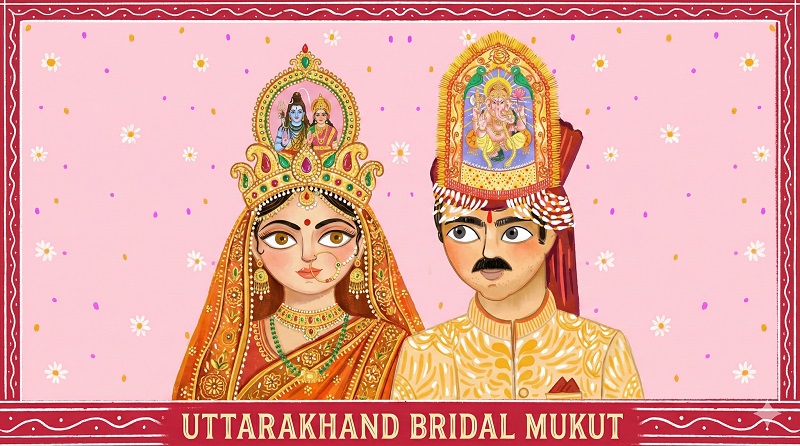
When you attend a wedding in the hills of Uttarakhand, the distinct attire of the bride and groom immediately catches your eye. Amidst the vibrant sounds of the Turri and Ransingha, and the red glow of the Pichora, there is one element that completes the traditional look, the Mukut.
This ceremonial crown is not just an accessory, it is a vital part of the ritual. The wedding attire in Uttarakhand is distinct, preserving centuries-old traditions that define both Kumaoni and Garhwali culture.
Whether the wedding is happening in a village in Pithoragarh or a city like Dehradun, the sentiment behind wearing the mukut remains deeply rooted in history.
Why Do Bride and Groom Wear Mukut in Uttarakhand?
In Hindu weddings, the groom is often treated as a representation of Lord Vishnu or Shiva, and the bride is seen as Goddess Lakshmi or Parvati.
In Uttarakhand, this belief is taken a step further through the attire. The Uttarakhand bridal mukut serves as a crown that validates this elevated status during the wedding rituals.
It is believed that when the couple wears the mukut, they are protected from negative energies or the evil eye. More than just protection, wearing the mukut establishes a deep connection to their Kul Devtas and ancestors.
This is why the mukut is rarely taken off during the main Lagan or Pheras. It acts as a shield and a symbol of divinity, marking the couple as the most important figures in the ceremony.
What is the Pahadi Bridal Mukut Made Of?
Historically, Kumaoni and Garhwali wedding mukuts were handcrafted by local artisans who specialized in traditional art forms. The most authentic mukuts are made from Shola Pith (a dried, milky-white spongy plant matter) or bamboo sticks known as seek.
In many local markets of Almora and Haldwani, you can still find artisans creating these by hand. They cut the white pith into delicate shapes and paste them onto a red paper base.
The use of red, yellow, and golden colors is significant. These are considered auspicious colors in the hills, similar to the colors used in Aipan art. While modern versions made of glitter paper and plastic are becoming common, the traditional Kumaoni and Garhwali mukut for wedding ceremonies was always biodegradable and lightweight, designed to be worn comfortably for hours.
Traditional Designs and Motifs on the Mukut
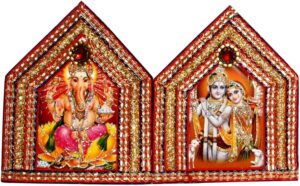
If you look closely at a bridal mukut, you will notice specific drawings and motifs that tell a story. These aren’t random designs, they are deeply symbolic.
While modern bridal mukuts often feature printed images of Radha-Krishna symbolizing divine love, the traditional handcrafted designs were famous for the Suwa (Parrot) motif, a symbol of the messenger of love in Pahadi folklore.
On the other hand, the mukut for groom is often simpler in shape but carries the powerful symbol of Lord Ganesha. Ganesha is the remover of obstacles, and his image on the groom’s forehead signifies a smooth start to married life.
Some designs also feature the Swastika or Om symbol, ensuring that every aspect of the garhwali and kumauni bride mukut or groom’s mukut is spiritually charged.
Kumaoni Wedding Mukut vs. Garhwali Mukut
While the core sentiment remains the same, there are subtle stylistic differences in how Kumaoni and Garhwali families incorporate the mukut into the wedding attire.
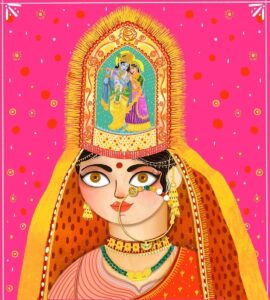
In the Kumaon region, the Kumaoni shadi mukut is often very prominent. It typically has a triangular or conical shape with two side flaps that frame the face. The focus on the Suwa (parrot) motif is generally stronger in Kumaoni designs.
In contrast, the Garhwali wedding mukut style can sometimes differ in how it is worn. In many Garhwali weddings, the groom wears a traditional Pagdi, and the mukut is either tied over the turban or is a smaller piece attached to the front.
However, for the bride, the Garhwali bride mukut remains largely similar to the Kumaoni style, a band worn on the forehead to complement the heavy gold jewelry like the Nath.
When is the Mukut Worn?
The Kumaoni mukut for bride or groom is not worn casually throughout the day. It is reserved for the most sacred part of the ceremony.
Usually, the family priest recites mantras to purify the mukut. It is then placed on the couple’s heads just before the Jaimala or before sitting at the Bedi.
This moment marks the official beginning of the religious marriage rites. Once the mukut is tied, the bride and groom typically do not leave the wedding venue until the ceremony is complete. It signifies their commitment to the ritual.
Keeping the Tradition Alive
Today, finding a handcrafted mukut made of traditional pith can be a bit harder than it was twenty years ago, but the tradition is far from lost. Still some people of Uttarakhand ensure that this piece of heritage is part of the trousseau.
Whether it is a handmade piece from a local bazaar or a modern variation, the emotion it carries is the same. It connects the couple to their ancestors, their village, and the rich cultural tapestry of Uttarakhand.